Relationship Wounds
- Marama Tuku
- Aug 1
- 3 min read


Relationship wounds are emotional injuries that develop through significant experiences of love, trust, connection, conflict, and loss.
Every relationship teaches us something about ourselves.
Healthy relationships often build trust, security, communication, and confidence.
Unhealthy relationships can shape beliefs about love, safety, vulnerability, and self-worth.
A relationship wound is rarely caused by one difficult moment.
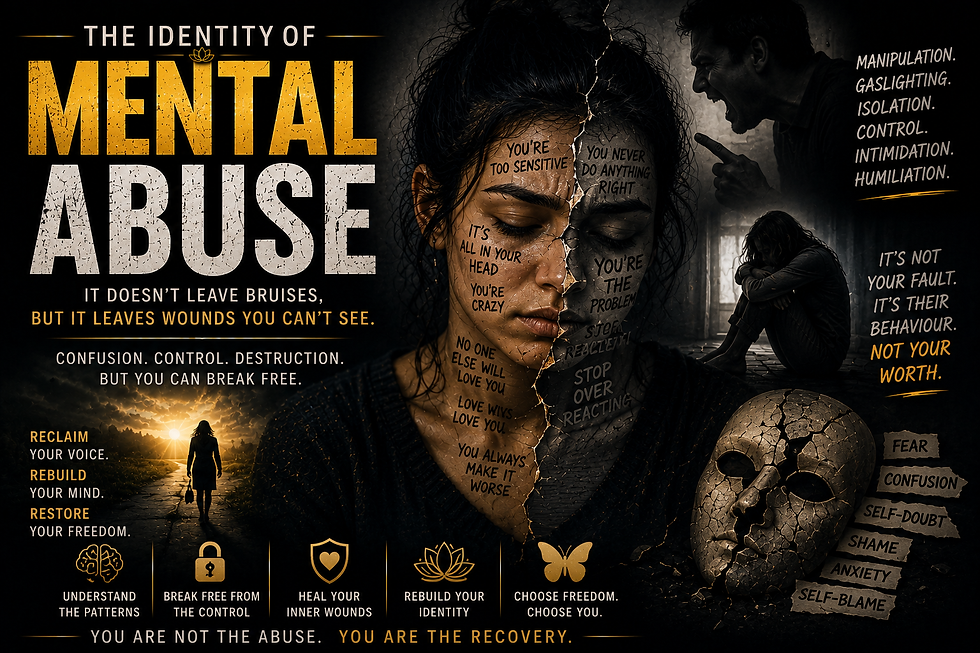
It usually develops through repeated experiences that leave someone feeling rejected, controlled, abandoned, betrayed, unseen, criticised, manipulated, or emotionally unsafe.
The relationship may have ended years ago.
The emotional pattern can continue long afterwards.
The purpose of understanding relationship wounds is not to blame previous partners.
It is to recognise the patterns that remain and prevent those patterns from shaping future relationships.
Where Relationship Wounds Begin
Relationship wounds can develop through experiences such as:
Repeated rejection.
Betrayal.
Infidelity.
Emotional neglect.
Constant criticism.
Manipulation.
Gaslighting.
Emotional or physical abuse.
Dishonesty.
Broken trust.
Controlling behaviour.
Conditional affection.
Frequent conflict.
Emotional inconsistency.
Lack of communication.
Feeling unheard.
Losing your identity within a relationship.
Remaining in relationships that required you to ignore your own needs.
The common experience becomes:
"Love doesn't feel emotionally safe."
What Beliefs Can Develop?
As painful experiences repeat, beliefs often begin forming such as:
I can't trust anyone.
Everyone leaves eventually.
Love always hurts.
I have to protect myself.
I'm difficult to love.
I'm never enough.
If I become vulnerable, I'll be hurt.
I have to earn love.
Relationships always end badly.
I can't be myself around other people.
These beliefs often become unconscious expectations that influence future relationships.
How Relationship Wounds Show Up
Relationship wounds often appear in behaviours such as:
Fear of commitment.
Fear of intimacy.
Jealousy.
Emotional withdrawal.
Hyper-independence.
People-pleasing.
Constant reassurance seeking.
Overthinking messages and conversations.
Difficulty trusting.
Difficulty communicating needs.
Avoiding vulnerability.
Staying in unhealthy relationships.
Leaving healthy relationships too early.
Losing yourself while trying to keep someone else.
Many people believe they are responding to the present relationship.
Often they are responding to experiences from the past.
How Relationship Wounds Can Influence Adult Life
Romantic Relationships
People may:
Repeat familiar relationship dynamics.
Choose emotionally unavailable partners.
Become emotionally unavailable themselves.
Fear abandonment.
Fear rejection.
Accept unhealthy treatment because it feels familiar.
Avoid closeness to reduce emotional risk.
Friendships
People may:
Keep emotional distance.
Fear betrayal.
Struggle to trust.
Expect disappointment.
Withdraw after conflict instead of repairing it.
Career
Relationship wounds can also influence professional environments.
People may:
Fear criticism.
Avoid collaboration.
Find it difficult to trust colleagues.
Overwork to gain approval.
Avoid leadership because of fear of rejection.
Self-Identity
Instead of asking,
"Who am I?"
People often begin asking,
"Who do I need to become so people won't leave?"
Identity becomes organised around avoiding pain rather than expressing authenticity.
Why Relationship Wounds Continue
The brain often prefers familiarity over uncertainty.
Even painful relationship patterns can feel familiar.
Without recognising these patterns, people often recreate similar relationships because the emotional dynamics feel known.
The cycle often becomes:
Past hurt.
Protective beliefs.
Protective behaviours.
Similar relationship outcomes.
Original beliefs become reinforced.
The pattern continues.
Healing Relationship Wounds
Healing relationship wounds begins by understanding that protection and connection must exist together.
1. Identify the pattern.
Ask:
What type of relationships do I repeatedly find myself in?
What similarities exist between them?
Patterns often reveal underlying beliefs.
2. Identify the belief.
Ask:
What do I believe about love?
Trust?
Vulnerability?
My own worth?
Beliefs formed through pain are not always accurate reflections of reality.
3. Separate the past from the present.
Every new relationship is not the previous relationship.
Allow people to demonstrate who they are through consistent actions rather than assuming they will repeat someone else's behaviour.
4. Strengthen boundaries.
Healthy boundaries create emotional safety without requiring emotional walls.
Boundaries protect relationships.
Walls prevent them.
5. Build self-worth independently.
The stronger your relationship with yourself becomes, the less dependent your wellbeing becomes on another person's validation.
Healthy relationships complement identity.
They should not replace it.
6. Choose relationships that reflect your values.
Healthy relationships are built through:
Trust.
Respect.
Honesty.
Communication.
Consistency.
Mutual responsibility.
Pay attention to repeated behaviour rather than isolated promises.
Final Thought
Relationship wounds often teach people how to survive.
Healing teaches people how to connect.
The experiences that hurt you explain many of your protective behaviours.
They do not determine your future relationships.
Healing begins when you stop asking,
"Why do I keep attracting the wrong people?"
And begin asking,
"What patterns am I repeating, and what healthier choices can I make moving forward?"
Your past relationships may explain your protective instincts.
They do not define your capacity for healthy connection.
The healthiest relationship you build begins with the relationship you create with yourself.


Comments