Identity Of Mental Abuse
- Marama Tuku
- 9 minutes ago
- 3 min read

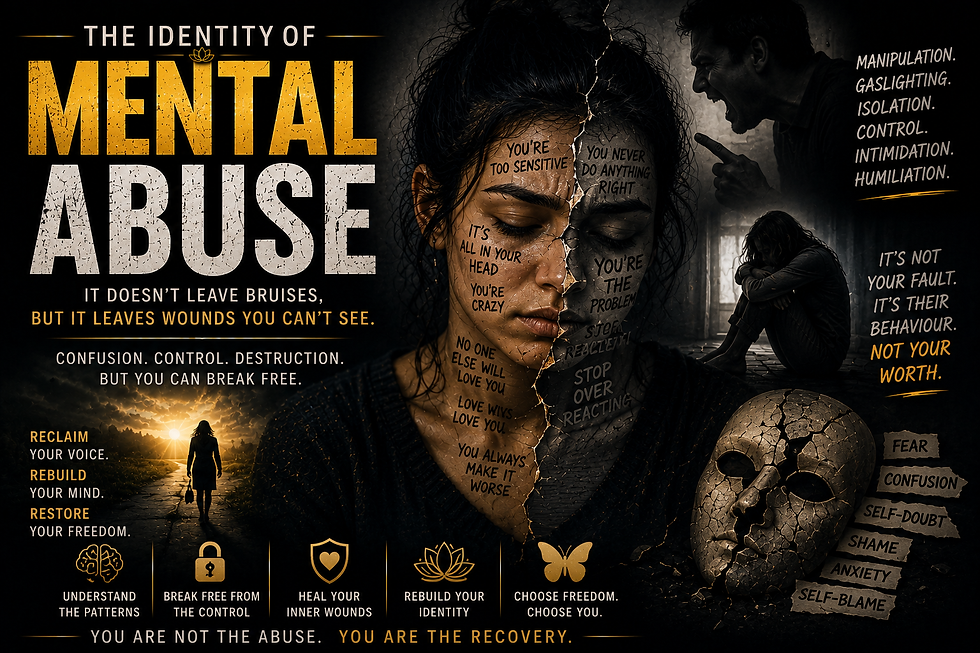
Mental abuse, often called psychological abuse or emotional manipulation, develops when a person's thoughts, perceptions, confidence, or sense of reality are repeatedly controlled, undermined, intimidated, or manipulated over time.
Unlike physical abuse, mental abuse often leaves no visible injuries.
Its effects are carried internally.
It gradually changes how a person thinks.
How they trust.
How they make decisions.
How they see themselves.
Because mental abuse is often subtle, many people do not recognise it until long after it has become part of daily life.
The purpose of understanding mental abuse is to recognise how repeated psychological manipulation shapes identity, behaviour, relationships, and self-belief.
Where Mental Abuse Begins
Mental abuse can occur in many environments, including:
Romantic relationships.
Families.
Friendships.
Schools.
Workplaces.
Religious organisations.
Community groups.
Positions of authority.
It may include behaviours such as:
Constant criticism.
Humiliation.
Intimidation.
Threats.
Manipulation.
Gaslighting.
Isolation.
Silent treatment.
Blame shifting.
Controlling behaviour.
Emotional blackmail.
Public embarrassment.
Repeated insults.
Mockery.
Dismissing emotions.
Withholding affection as punishment.
Creating fear or confusion.
Making someone question their memory or perception.
The common experience becomes:
"I cannot trust my own thoughts."
What Beliefs Can Develop?
Over time, mental abuse often creates beliefs such as:
Everything is my fault.
I am never good enough.
I cannot trust my judgment.
My feelings don't matter.
I deserve this treatment.
I should stay quiet.
Speaking up makes things worse.
I am difficult to love.
I need permission to make decisions.
I will fail without someone else.
These beliefs are learned responses to repeated manipulation.
They are not objective truths.
How Mental Abuse Shows Up
Mental abuse often appears through behaviours such as:
Constant self-doubt.
Overthinking.
Fear of making mistakes.
Hypervigilance.
Difficulty making decisions.
Apologising excessively.
People-pleasing.
Anxiety.
Low confidence.
Feeling confused.
Difficulty trusting yourself.
Fear of conflict.
Emotional withdrawal.
Walking on eggshells.
Constantly seeking reassurance.
Many people continue questioning themselves long after the abusive environment has ended.
How Mental Abuse Can Influence Adult Life
Relationships
People may:
Struggle to trust healthy partners.
Tolerate unhealthy behaviour.
Fear disagreement.
Lose their own identity.
Seek constant reassurance.
Become emotionally dependent.
Career
People may:
Underestimate their abilities.
Avoid leadership.
Fear criticism.
Remain silent despite valuable ideas.
Constantly seek approval.
Identity
Instead of asking,
"What do I think?"
The mind often asks,
"What will upset someone else?"
Identity becomes organised around avoiding conflict rather than expressing authenticity.
Why Mental Abuse Continues
The cycle often becomes:
Manipulation.
Self-doubt.
Compliance.
Temporary peace.
More manipulation.
Further loss of confidence.
The cycle repeats.
Eventually, the person begins policing themselves without external pressure because the abusive messages have become internal beliefs.
Hidden Costs of Mental Abuse
Mental abuse quietly reduces:
Confidence.
Independence.
Decision-making.
Self-trust.
Emotional safety.
Creativity.
Authenticity.
Healthy boundaries.
Personal freedom.
Hope.
The greatest loss is often believing someone else's voice more than your own.
Healing the Wound of Mental Abuse
Healing is not about pretending the abuse never happened.
It is about rebuilding trust in yourself.
1. Name what happened.
Recognising manipulation is often the first step toward breaking its influence.
Clarity reduces confusion.
2. Separate their voice from your own.
Ask yourself:
Is this belief actually mine, or was it repeatedly taught to me?
Awareness weakens internalised messages.
3. Rebuild self-trust.
Make small decisions independently.
Notice when your judgment proves reliable.
Self-trust grows through repeated evidence.
4. Strengthen boundaries.
Healthy relationships allow disagreement without intimidation.
Learning to recognise controlling behaviour early protects emotional wellbeing.
5. Reconnect with your own perspective.
Practise asking:
What do I genuinely think?
What do I actually want?
What feels true to me?
These questions help restore personal agency.
6. Build a new identity.
Your identity does not belong to the person who manipulated you.
It belongs to you.
Develop values, relationships, and environments that reinforce honesty, respect, and mutual accountability.
Final Thought
Mental abuse often convinces people that they are weak, incapable, or permanently damaged.
Those beliefs are part of the abuse.
They are not evidence of who you are.
Healing begins when you stop asking,
"What would they think about me?"
And begin asking,
"What do I know to be true about myself?"
No one has the authority to define your identity through manipulation.
Your voice, your judgment, and your ability to think clearly can be rebuilt.
The strongest recovery is not becoming someone new.
It is recovering the person whose confidence was gradually taken away.


Comments