Identity Of Physical Abuse
- Marama Tuku
- 19 hours ago
- 3 min read


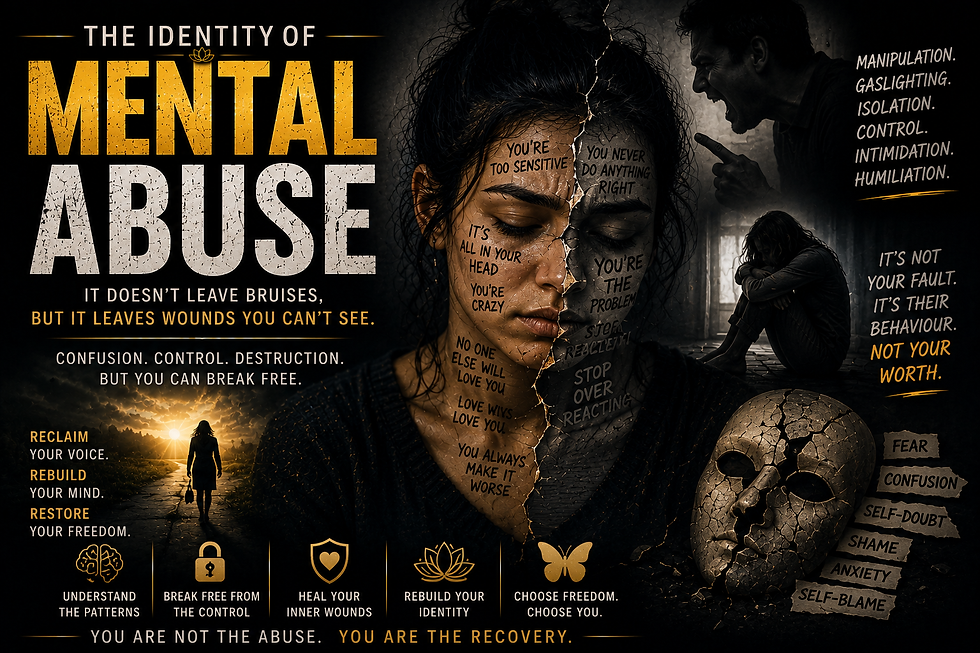
Emotional abuse develops when repeated patterns of behaviour are used to control, diminish, intimidate, shame, manipulate, or emotionally injure another person.
Unlike occasional conflict, emotional abuse is characterised by consistent patterns that gradually weaken a person's confidence, emotional security, and sense of self.
The damage is often invisible.
There may be no physical injuries.
Yet emotional abuse can profoundly influence how a person thinks, feels, relates to others, and understands their own worth.
Many people experiencing emotional abuse do not recognise it immediately because the behaviours often become normalised over time.
The purpose of understanding emotional abuse is to recognise these patterns, understand their long-term effects, and rebuild an identity that is no longer defined by them.
Where Emotional Abuse Begins
Emotional abuse can occur within:
Romantic relationships.
Families.
Friendships.
Schools.
Workplaces.
Religious organisations.
Community groups.
Positions of authority.
It may involve behaviours such as:
Constant criticism.
Humiliation.
Belittling achievements.
Name-calling.
Silent treatment.
Emotional manipulation.
Shame.
Mockery.
Rejection.
Emotional neglect.
Blame shifting.
Conditional affection.
Threats of abandonment.
Controlling behaviour.
Intimidation.
Public embarrassment.
Invalidating emotions.
Making someone feel guilty for having needs.
The common experience becomes:
"My emotions are not safe."
What Beliefs Can Develop?
Over time, emotional abuse often creates beliefs such as:
I'm too sensitive.
My feelings don't matter.
I cause problems.
I'm difficult to love.
I always disappoint people.
I should stay quiet.
I need permission to express myself.
I don't deserve kindness.
My needs are a burden.
Love must be earned.
These beliefs develop through repeated emotional experiences.
They are learned.
They are not facts.
How Emotional Abuse Shows Up
Emotional abuse often appears later in life through behaviours such as:
Constant apologising.
Fear of conflict.
People-pleasing.
Low confidence.
Emotional withdrawal.
Difficulty expressing emotions.
Fear of disappointing others.
Difficulty trusting healthy relationships.
Walking on eggshells.
Self-criticism.
Hypervigilance.
Feeling guilty for saying no.
Difficulty receiving compliments.
Fear of vulnerability.
Many people continue protecting themselves from emotional harm long after the abusive relationship has ended.
How Emotional Abuse Can Influence Adult Life
Relationships
People may:
Accept unhealthy behaviour.
Fear abandonment.
Lose their identity within relationships.
Constantly seek reassurance.
Avoid expressing needs.
Feel responsible for other people's emotions.
Career
People may:
Avoid leadership.
Underestimate their abilities.
Fear criticism.
Stay silent despite valuable ideas.
Constantly seek approval.
Identity
Instead of asking,
"What do I feel?"
The mind often asks,
"What emotions are acceptable to everyone else?"
Identity becomes organised around emotional survival rather than emotional authenticity.
Why Emotional Abuse Continues
The cycle often becomes:
Criticism.
Self-doubt.
People-pleasing.
Temporary peace.
Further criticism.
Reduced confidence.
The cycle repeats.
Eventually, the external criticism becomes internal self-criticism.
The abusive voice no longer needs to be present because it has become part of the person's internal dialogue.
Hidden Costs of Emotional Abuse
Emotional abuse quietly reduces:
Self-worth.
Emotional safety.
Confidence.
Trust.
Authenticity.
Joy.
Healthy boundaries.
Self-expression.
Independence.
Hope.
The greatest loss is often believing your emotions are something that must be hidden rather than understood.
Healing Emotional Abuse
Healing is not about pretending the past did not happen.
It is about rebuilding emotional safety within yourself.
1. Recognise abusive patterns.
Understanding what emotional abuse looks like helps separate unhealthy behaviour from healthy relationships.
Awareness interrupts repetition.
2. Validate your emotions.
Every emotion provides information.
Having emotions does not make you weak, dramatic, or difficult.
It makes you human.
3. Separate your identity from their behaviour.
How someone treated you reflects their behaviour.
It does not define your value.
Another person's inability to treat you with respect is not evidence that you deserve disrespect.
4. Strengthen emotional boundaries.
Healthy relationships allow disagreement, vulnerability, honesty, and emotional expression without punishment or manipulation.
Boundaries protect emotional wellbeing.
5. Practise self-trust.
Notice your emotional experiences without immediately dismissing them.
Ask:
What am I feeling?
What is this emotion trying to communicate?
Learning to trust your emotional experience rebuilds confidence.
6. Build an identity beyond survival.
Develop relationships, habits, values, and environments that reinforce respect, kindness, honesty, accountability, and mutual care.
Your future identity does not need to be organised around surviving your past.
Final Thought
Emotional abuse often teaches people that their emotions are dangerous, inconvenient, or unacceptable.
Healing teaches something different.
Your emotions deserve to be understood.
Not controlled.
Not silenced.
Not punished.
Healing begins when you stop asking,
"How do I avoid upsetting everyone else?"
And begin asking,
"How can I honour my emotions while also respecting the emotions of others?"
Healthy relationships make room for emotional honesty.
Your identity is not defined by the way someone treated you.
It is rebuilt every time you choose honesty, self-respect, healthy boundaries, and emotional authenticity.


Comments