Identity Of Shame
- Marama Tuku
- Aug 1
- 3 min read


Shame is one of the most powerful emotions a person can experience because it affects identity rather than behaviour.
Guilt says,
"I did something wrong."
Shame says,
"There is something wrong with me."
This distinction is important.
Healthy guilt can encourage learning and accountability.
Shame often convinces people that they are fundamentally flawed or unworthy.
The purpose of understanding shame is not to judge yourself.
It is to recognise where it developed and how it influences your life today.
Where Shame Begins
Shame often develops in environments where a person's identity is criticised instead of their behaviour.
Examples include:
Constant criticism.
Public humiliation.
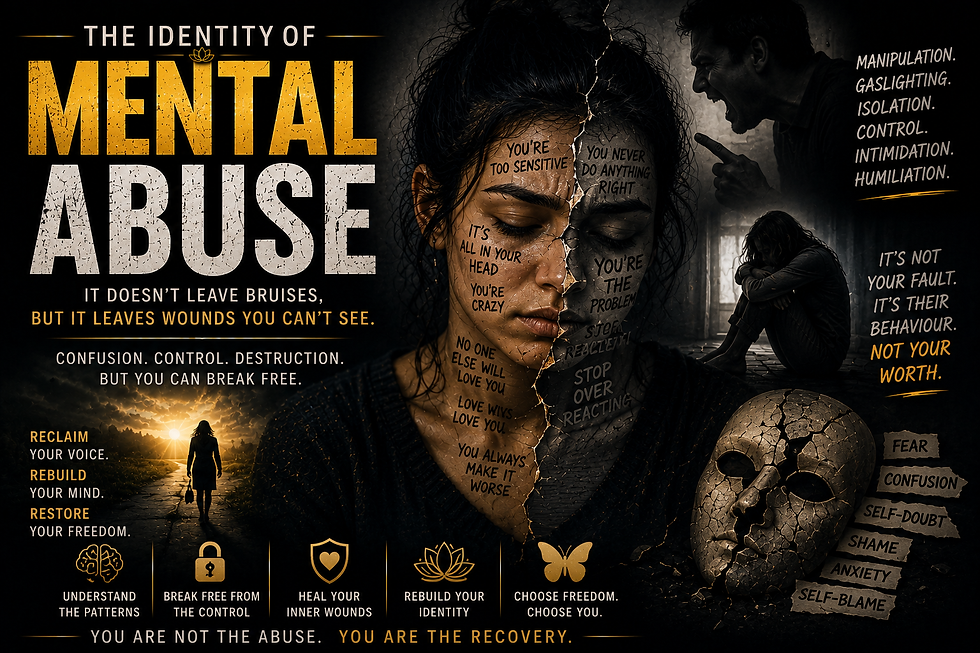
Emotional abuse.
Bullying.
Being compared with others.
Growing up feeling "not enough."
Repeated rejection.
Perfectionist expectations.
Being blamed for things outside your control.
Being laughed at for making mistakes.
Growing up where emotions were dismissed.
Experiencing neglect.
Betrayal by trusted people.
Childhood trauma.
The common experience becomes:
"If people really knew me, they wouldn't accept me."
What Beliefs Can Develop?
Over time, shame can create beliefs such as:
I'm not enough.
I'm broken.
I'm unlovable.
I don't deserve happiness.
I'll never be good enough.
People will reject the real me.
I have to hide parts of myself.
My mistakes define me.
I don't belong.
These beliefs often operate automatically and influence decisions without conscious awareness.
How Shame Shows Up
Shame doesn't always look like sadness.
It often hides beneath other behaviours.
Examples include:
Perfectionism.
People-pleasing.
Constant apologising.
Fear of being seen.
Fear of failure.
Fear of success.
Avoiding opportunities.
Hiding mistakes.
Difficulty accepting compliments.
Self-criticism.
Comparing yourself to others.
Withdrawing from relationships.
Becoming defensive when criticised.
Feeling like a fraud despite evidence of success.
Shame often convinces people that if they hide enough, they will be accepted.
Unfortunately, hiding also prevents genuine connection.
How Shame Can Influence Adult Life
Relationships
People may:
Fear vulnerability.
Hide their true feelings.
Accept poor treatment.
Constantly seek approval.
Believe they must earn love.
Push people away before they are rejected.
Career
People may:
Underestimate their abilities.
Avoid promotions.
Fear visibility.
Downplay achievements.
Experience imposter syndrome.
Personal Growth
Shame often keeps people small.
Instead of asking,
"What can I become?"
The mind begins asking,
"What if people discover I'm not enough?"
This fear limits growth long before ability does.
Why Shame Continues
Shame grows through secrecy.
The more it is hidden, the more powerful it often becomes.
Avoidance provides temporary relief.
But it also reinforces the belief that the shame must remain hidden.
The cycle often becomes:
Shame.
Hiding.
Temporary relief.
More shame.
More hiding.
Without recognising the underlying belief, the pattern continues.
Healing Shame
Healing shame begins by separating your identity from your experiences.
1. Identify the belief.
Ask:
What do I believe about myself?
Where did I first learn this belief?
Is it objectively true?
2. Separate behaviour from identity.
Making mistakes does not make you a mistake.
Your actions can change.
Your value does not disappear because you are imperfect.
3. Replace secrecy with honesty.
Speaking openly with trusted people can reduce shame's influence.
Shame often becomes weaker when it is no longer hidden.
4. Challenge self-critical thinking.
Notice how you speak to yourself.
Ask whether you would speak to someone you care about in the same way.
5. Practise self-acceptance.
Accepting yourself does not mean believing you cannot improve.
It means recognising that growth does not require self-rejection.
6. Build evidence against the belief.
Notice moments that contradict the belief that you are "not enough."
Over time, repeated evidence helps weaken long-held assumptions.
Final Thought
Shame tells people they are their mistakes.
Healing reminds people they are more than their mistakes.
Your experiences have shaped you.
They have not defined your value.
The goal is not to become perfect.
The goal is to recognise that your worth has never depended on perfection.
Healing begins when you stop asking,
"What's wrong with me?"
And begin asking,
"What happened that made me believe something was wrong with me?"


Comments