Identity Of Sadness
- Marama Tuku
- 22 hours ago
- 3 min read

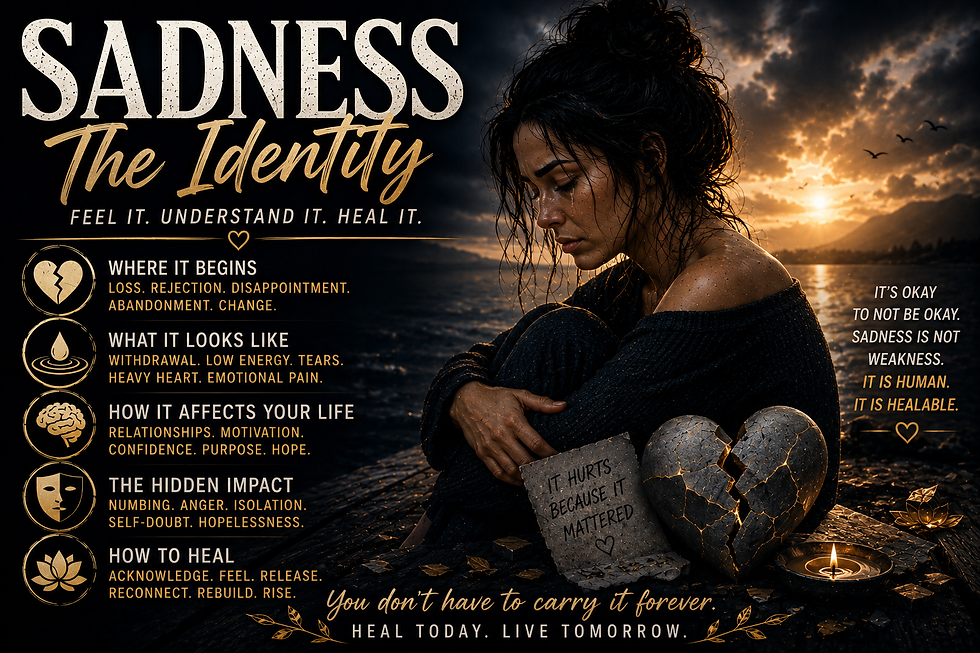
Sadness is a natural emotional response to loss.
It exists because something important has changed, ended, been lost, or failed to happen as we hoped.
Sadness is not a weakness.
It is the mind and body's way of recognising that something meaningful has been affected.
Everyone experiences sadness.
The difference is not whether sadness exists.
The difference is how it is understood, expressed, and processed.
When sadness is acknowledged, it can gradually move through us.
When it is avoided or suppressed, it may continue influencing our thoughts, emotions, and behaviours.
Where Sadness Begins
Sadness can develop from many different experiences.
Examples include:
The death of someone close.
The end of a relationship.
Divorce.
Rejection.
Betrayal.
Abandonment.
Loneliness.
Feeling misunderstood.
Losing a job.
Financial hardship.
Illness.
Dreams or goals that never happened.
Disappointment.
Feeling disconnected from purpose.
Major life changes.
The common experience is loss.
Sometimes the loss is obvious.
Sometimes it is the loss of what someone hoped life would be.
What Beliefs Can Develop?
If sadness remains unresolved for long periods, people may begin forming beliefs such as:
Things never work out for me.
I'll always lose people.
Happiness doesn't last.
Life is unfair.
I'm alone.
No one understands me.
There's no point trying.
Nothing will change.
I have nothing to look forward to.
These beliefs often grow from repeated experiences of disappointment or grief.
How Sadness Shows Up
Sadness is not always expressed through crying.
It can appear in many different ways.
Examples include:
Withdrawing from people.
Low motivation.
Loss of interest in activities.
Reduced energy.
Difficulty concentrating.
Sleeping more or less than usual.
Feeling emotionally flat.
Becoming quiet.
Increased irritability.
Reduced confidence.
Avoiding social situations.
Feeling overwhelmed by simple tasks.
Losing hope.
Feeling disconnected from others.
For some people, sadness appears as anger, frustration, or emotional numbness rather than tears.
How Sadness Can Influence Adult Life
Relationships
People may:
Withdraw emotionally.
Find it difficult to express their feelings.
Fear becoming close because of future loss.
Feel misunderstood.
Struggle to ask for support.
Career
People may:
Lose motivation.
Avoid opportunities.
Feel disconnected from work.
Question their abilities.
Find it difficult to stay engaged.
Personal Growth
Sadness can reduce the belief that change is possible.
Instead of asking,
"What's possible?"
The mind begins asking,
"What's the point?"
Over time, this can reduce action, confidence, and hope.
Why Sadness Can Stay
Sadness often remains when it has not been acknowledged or processed.
Many people try to distract themselves by staying busy, avoiding difficult emotions, or pretending they are fine.
This may provide temporary relief.
It does not resolve the underlying emotion.
Sometimes sadness is also maintained by repeated thoughts that reinforce hopelessness or self-criticism.
Healing Sadness
Healing sadness does not mean pretending loss never happened.
It means allowing yourself to experience the emotion while gradually rebuilding connection, purpose, and hope.
1. Acknowledge the loss.
Ask:
What have I actually lost?
What am I grieving?
Naming the loss creates clarity.
2. Allow yourself to feel.
Sadness is an emotion.
Like other emotions, it often becomes more manageable when it is acknowledged rather than suppressed.
3. Separate the event from your identity.
Losing something important does not mean you have lost your value.
An experience is not your identity.
4. Reconnect with people and purpose.
Isolation often strengthens sadness.
Healthy connection and meaningful activities can help rebuild a sense of direction.
5. Focus on small actions.
When motivation is low, small consistent actions are often more sustainable than waiting to feel motivated.
Small steps gradually build momentum.
6. Allow hope to grow gradually.
Hope rarely returns all at once.
It is often rebuilt through repeated experiences that show life can still contain meaning, connection, and possibility.
Final Thought
Sadness exists because something mattered.
It reflects the importance of what has been lost.
The goal is not to eliminate sadness.
The goal is to prevent sadness from becoming your identity.
You can experience sadness without becoming defined by it.
Loss may become part of your story.
It does not have to become the whole story.
Healing begins when you recognise that while you cannot always choose what you lose, you can choose how you move forward.


Comments